Season Overview
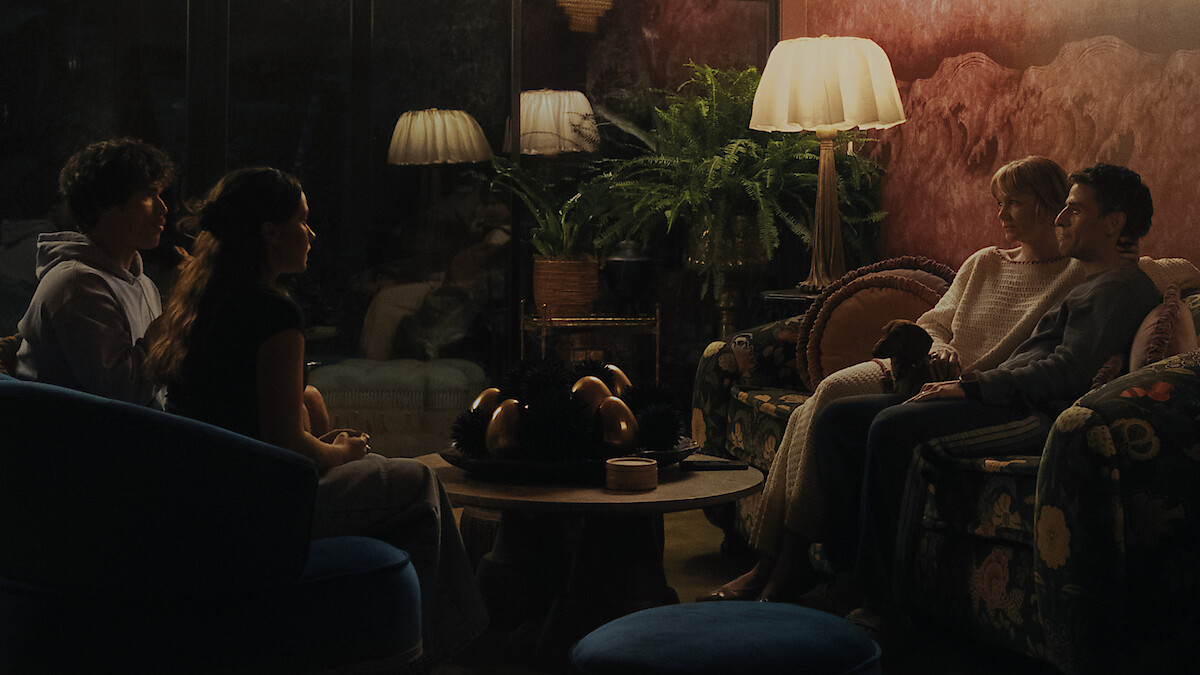
Season 2 reimagines Beef as an anthology. Where S1 explored road rage between two individuals (Danny & Amy), S2 shifts to "club rage" — two couples locked in escalating blackmail, fraud, and violence at Monte Vista Point Country Club. The central conflict is rooted in class: wealthy, hollowed-out elites vs. young, desperate workers, all under the thumb of a billionaire owner with her own secrets. 1
Episode-by-Episode Recap
Ep 1 — "All The Things We'll Never Get To Have"
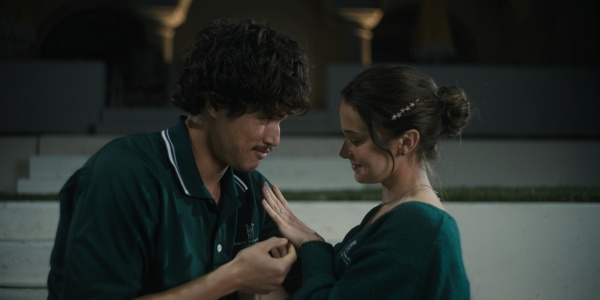
Josh (GM) and Lindsay (interior designer) appear to be the perfect country club power couple, but their marriage is a hollowed-out husk — stalled B&B project, no intimacy for a year, squandered inheritance. 1 During a post-fundraiser argument, Josh looms over Lindsay with a golf club. Ashley (F&B cart driver) and Austin (part-time trainer), a young engaged couple working the event, return Josh's forgotten wallet and witness the scene through a shed window. Ashley films it. 7
Key pivot: Class-based tension replaces S1's sprawling chase scenes. Ashley receives a devastating medical diagnosis (ovarian cyst requiring surgery, threatening fertility), shifting her from victim to opportunist. The episode ends with a chillingly polite confrontation — cookies at the doorstep. 7
Ep 2 — "A New Starting Point for Further Desires"
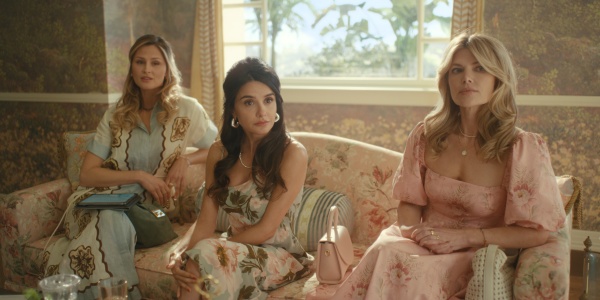
Ashley leverages the video into a $45K/year position with health insurance. Josh knows digital copies still exist. Lindsay discovers the tennis instructor (Woosh) is a scam artist and blackmails HIM into securing a Seoul skin consultation — unknowingly connecting to Dr. Kim, Chairwoman Park's husband. 8 Josh begins embezzling club funds into his dead mother's account ("Marta Lucretia Diaz"). 1 Ashley presents a fake PT license for Austin. They become unintentional co-conspirators. Cliffhanger: Dr. Kim confesses a fatal surgical error to Park. 8
Ep 3 — "The Increasing Flimsiness of Any Certainties About the Future"
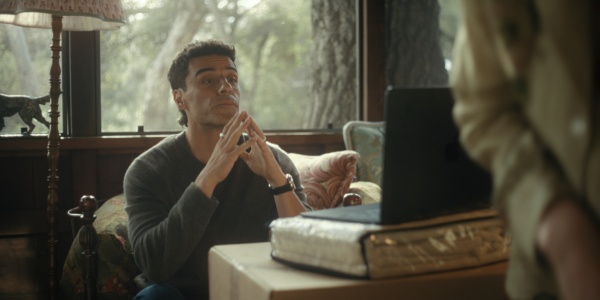
Park covers up the death ("blame a pre-existing condition"). 8 Austin accidentally exposes Josh's embezzlement while trying to impress Eunice. Instead of firing Josh, Park recruits him as her money launderer — $4,999 payments to Korean names (just under banking red flags). 1 Josh trades independence for survival. Austin confesses attraction to Eunice. Ashley leaps from a moving car in desperation, falling into water.
Ep 4 — "Oh, the Comfort, the Inexpressible Comfort"
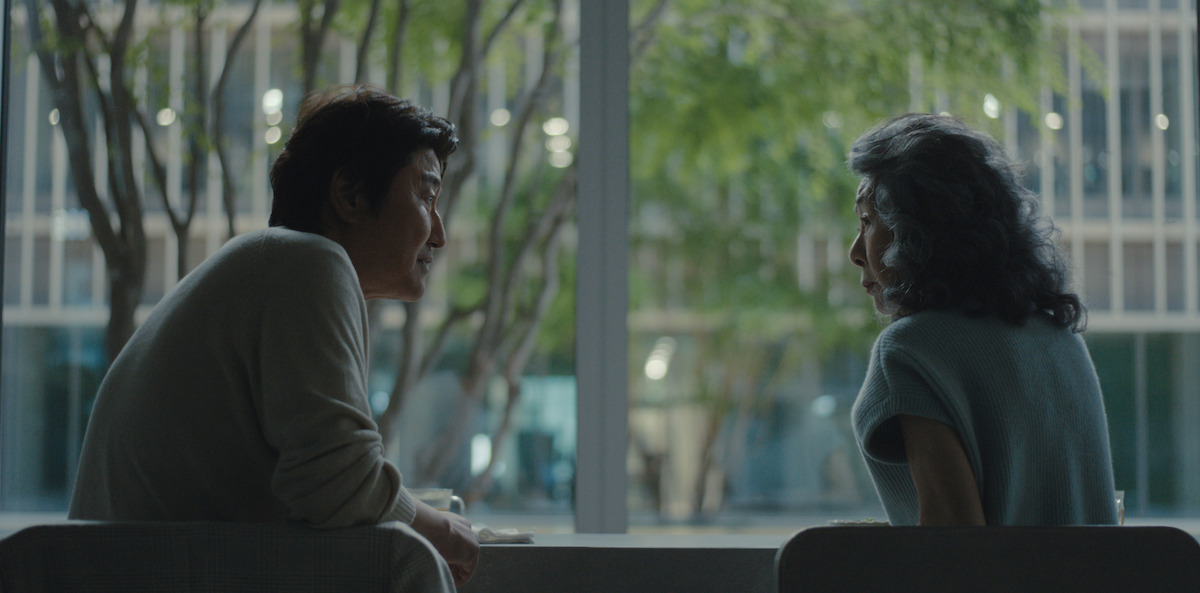
Almost entirely set in a hospital. Ashley's insurance won't cover the ER visit. Josh arrives tactically to leverage her vulnerability. Ashley refuses. Her ovarian torsion is ignored until she collapses. She dreams of a clean recovery — then wakes to learn one ovary was removed. Josh sends the hospital owner as a "favor" and texts "You're welcome." Ashley breaks. She infiltrates Josh and Lindsay's home, contaminating their orange juice with menstrual blood and photographing financial crimes. 7
Ep 5 — "I Am Killing My Flesh Without It"
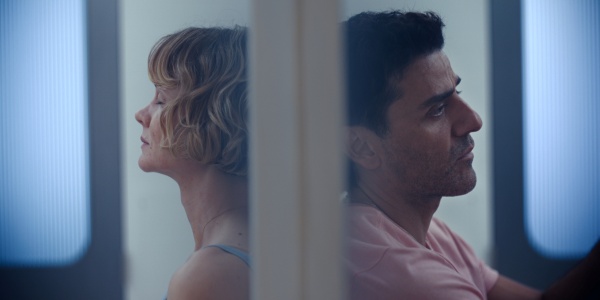
Josh nearly drinks the contaminated juice (saved by Lindsay's comment on his sugar intake). Their dog Burberry goes missing — Ashley is responsible. A coyote mauls Burberry; Lindsay fights it off, but the dog dies. In the vet waiting room, Lindsay asks for a divorce. Josh simply agrees. Ashley and Lindsay form an unlikely bond during the search, with Ashley weaponizing truth about Josh to alienate Lindsay further. 7
Ep 6 — "Those Blue Remembered Hills"
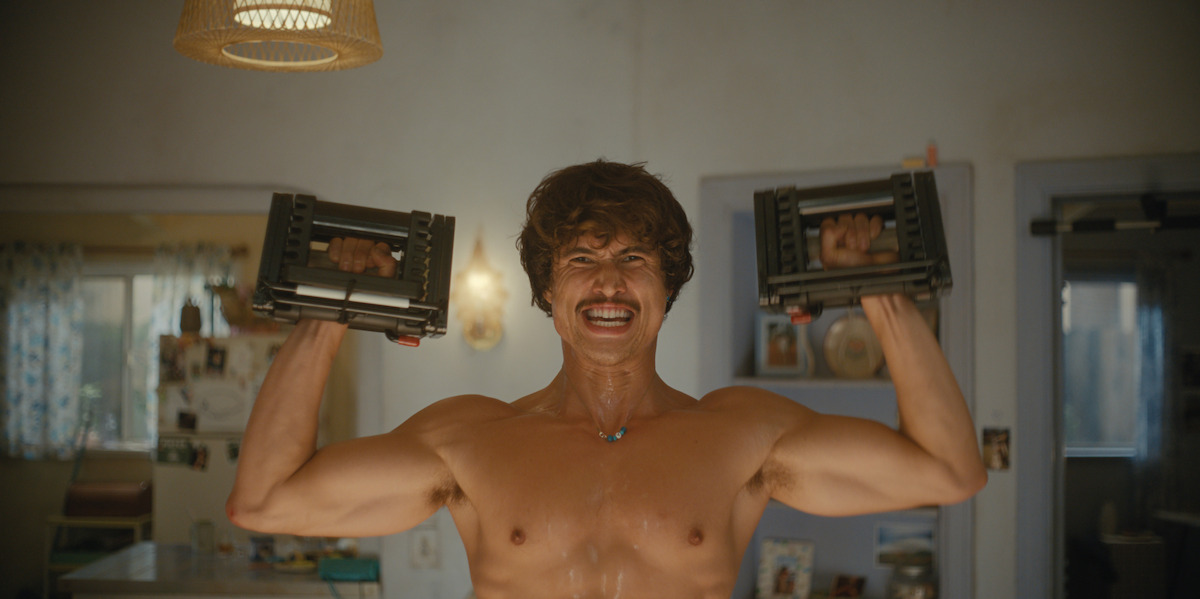
Park launches a "medical tourism" initiative selling Trochos clinic procedures through the club — a legal cash flow masking bribes. The divorce becomes a cold war. Lindsay and Ashley develop a genuine bond (Lindsay confesses a past miscarriage), but in Beef's world, even shared grief is filed away for future use.
Ep 7 — "The Hour of Separation"
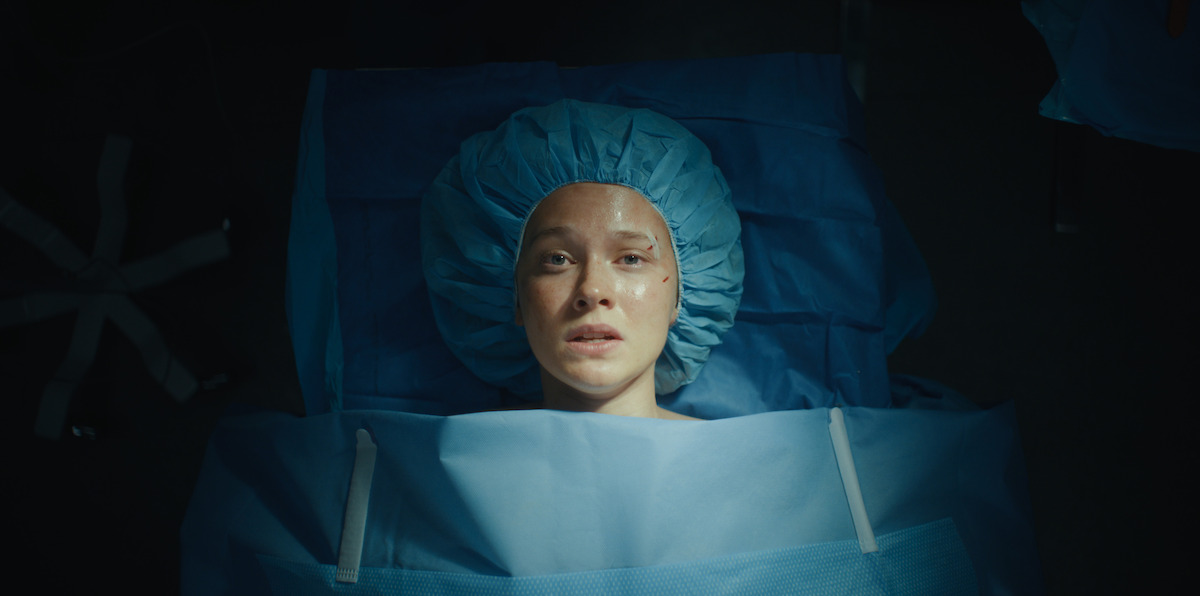
The web tightens. Eunice discovers Park's phone contains evidence of the embezzlement and death cover-up. She copies it to a USB. 9 Meanwhile, Ashley and Austin pursue IVF and discover a viable embryo — raising the stakes for their future. Austin's mother warns him that a baby will trap him in the relationship, revealing Austin suffered childhood abuse. Austin sabotages his sperm sample with hand sanitizer. The episode builds toward the Seoul trip where all characters converge. 9
Ep 8 — "It Will Stay This Way and You Will Obey"
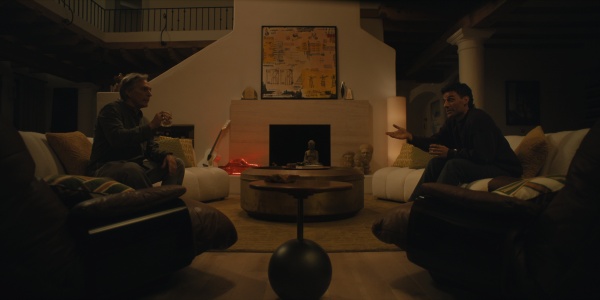
Set primarily in Seoul at the Trochos clinic. Eunice loses the USB when Lindsay drops Park's phone in the airplane toilet. Austin swallows the USB, retrieves it, then loses it again. Dr. Kim tries to flip on Park for a reduced sentence, but Park hears everything. A bloody action sequence erupts through the clinic; Dr. Kim is killed in the crossfire. All four protagonists are taken hostage. 8
Park delivers her thesis monologue: love is just another way to serve the self. Capitalism is a system of nature. Josh takes sole blame — eight years in prison, Lindsay walks free. Austin and Ashley break up; Austin escapes with the USB but delivers it to Park instead of the authorities, succumbing to the system. 8
Eight-year time jump: Josh is about to be released; Lindsay has remarried in the English countryside. Ashley is now Monte Vista's manager, married to Austin with a child named Ashton, slipping into old patterns. Park visits her first husband's grave, lamenting: "This great, even beautiful cycle of life leaves us no choice but to accept it gladly." 1
Themes
1. 🔁 Cycles and Samsara
The dominant theme. Lee Sung Jin draws directly from the Buddhist/Hindu concept of samsara — the eternal wheel of life, death, love, and suffering. 1 The finale's bird's-eye shot shows all characters arranged in concentric rings around Park, forming a clock face/zodiac. As Lee told Audacity: "We're all kind of eternally trapped in these cycles." The younger couple literally become the older couple — Ashley rises to club manager, Austin follows Josh's path. 1
2. 💰 Capitalism and Self-Interest
Park's monologue is the season's thesis: "Love lives in this system. All relationships exist in this system. They are all the same, another way to serve the self." Every character leverages their partner for wealth, status, or survival. The country club is a microcosm of late capitalism — everyone is selling something to someone above them. 7
3. 📐 Class Warfare
The show weaponizes class. Josh and Lindsay have positional power but are drowning in debt. Ashley and Austin have ambition but no capital. Park has infinite capital and uses it to make everyone complicit. The "American Dream" is reframed as a trap — upward mobility requires moral descent. 7
4. ❤️ Love as Transaction
Every relationship is examined through transaction. Josh and Lindsay's marriage is a business partnership that failed. Austin and Ashley's love is tested when self-interest enters. Even Park's visit to her first husband's grave reads as settling accounts, not genuine grief. The show asks: is any love purely selfless? 7
5. 🏥 Bodies and Control
Bodies are battlegrounds. Ashley's ovarian crisis drives her transformation. Dr. Kim's surgical error triggers the conspiracy. The clinic action sequence literalizes violence against the body. Even fertility (IVF, miscarriage, lost ovary) becomes a plot lever. 7
6. 🐺 Predation at Every Level
Everyone at Monte Vista is "a predator in training." Lindsay blackmails Woosh. Josh intimidates Ashley. Ashley extorts Josh. Park corrupts everyone. The show suggests that under capitalism, predation isn't a moral failing — it's a survival strategy. 8
Cinematography
DP: James Laxton (Moonlight, If Beale Street Could Talk, taking over from S1's Larkin Seiple) 3
Camera & Format
- Shot on ARRI ALEXA 265 — likely the first long-form TV show to use this camera 3
- 65mm large-format sensor providing the same image quality as Laxton's theatrical films (Beale Street) but with the speed and compactness needed for TV production 3
- Could move rapidly between Steadicam, handheld, and studio setups 3
Lenses
- ARRI DNA lenses — modern glass with vintage character 3
- Laxton: "They have this really beautiful sense of modern glass meets old vintage character and fullness... rides between eras, and that spoke to me in a sense of generations, of cycles" 3
- The lens choice visually reinforces the generational theme — the image feels simultaneously contemporary and timeless 3
Visual Approach
- Class through framing: Power dynamics articulated through shot scale, composition, and camera height. Josh is often shot from positions of authority; Ashley from below, looking up 3
- Intimacy through proximity: Laxton prioritized finding "intimacy with each character" and connecting the audience to their emotional perspective 3
- Visual cycles: The blocking and composition deliberately mirrors the couples — Josh/Lindsay and Austin/Austin are framed similarly as their paths converge 3
- Hospital episode (Ep 4): Stark, sterile, institutional — the camera makes Ashley literally invisible in the frame composition 3
- Nature vs. civilization (Ep 5): The coyote sequence uses raw, handheld work contrasting with the polished club aesthetics 3
The Finale Shot
The closing bird's-eye pullback revealing all characters in concentric rings (samsara/wheel of life): 1 - Designed to be "observational, not close on each one" — providing distance to absorb all the stories at once 1 - Each couple occupies a different ring at a different "stage" of their cycle 1 - Forms a visual mandala/clock face 1 - The camera doesn't editorialize — it simply observes the cycle continuing 1 - Inspired by samsara paintings Lee looked at while writing — paintings presided over by the god of death, "with this circle with these vignettes of life" 1
The Clinic Action Sequence (Ep 8)
- Oldboy-inspired single-take fight scene through the Trochos clinic 1
- Director Jake Schreier (fresh off Marvel's Thunderbolts) balanced "equal moments of triumph and laughable failure" for Charles, Cailee, and Carey 1
- TV budget constraints acknowledged — focused on character beats within the oner rather than trying to outdo film action sequences 1
Sound & Music
- Finneas O'Connell composed the score 1
- Needle drops are a signature element — "energy-boosting" and era-blending 6
- Finale closes with Phoenix's "Love Like a Sunset": "A visible illusion / Oh, where it starts, it ends" 1
Reception
Metacritic: 77/100 (32 reviews — "generally favorable") 4 Rotten Tomatoes: Critics consensus: "pairs its second season with winning performers and a crackling sense of ingenuity" 5 Common praise: Ambitious themes, stacked ensemble, gorgeous cinematography, Finneas score 4 Common criticism: More overcrowded/unfocused than S1, less tense, some plot points feel far-fetched 4
Frequently Asked Questions
Why do characters sometimes see themselves as other people? (The "Mirror Moments")
This is one of the show's most deliberate visual techniques. Lee Sung Jin uses these hallucination/dissolve moments to show characters literally seeing themselves in other lives — lives they envy, resent, or fear becoming: 2
- Ep 1: Josh hallucinates becoming Troy while talking to him — imagining himself with Troy's wealth and ease 2
- Ep 1: When Lindsay is let go from the club, she hauls her decor out defeated, then suddenly appears dressed in the soft purple pastels of the very wealthy women she once designed for — slipping into the life she was never allowed to inhabit 2
- Ep 3: Josh's wedding photo subtly transforms into an image of Josh marrying himself — a surreal reflection of his narcissism 2
- Ep 7: Ashley, now transformed into an authority figure on a first-class flight, becomes exacting over a cookie order — then the perspective shifts and she sees herself as the flight attendant forced to satisfy her own impossible demands. (This is the air stewardess moment — it's about Ashley recognizing that she's become the exact kind of entitled person she used to resent) 2
- Ep 8: Austin sees himself as a beleaguered partner of a couple at a Korean spa 2
Netflix's Tudum confirmed these are intentional "mirror moments" — the characters "quite literally dissolve into one another, catching glimpses of themselves refracted through the lives they envy or resent." It's the visual manifestation of the samsara/cycles theme. 2
Were Woosh and Eunice related to Chairwoman Park?
Woosh — Yes. He is Park's stepson from a previous marriage. 1 He was a tennis pro at Monte Vista running a side hustle — scamming club members with fake "romantic" relationships to push overpriced Korean skincare products. 8 Lindsay discovered this and blackmailed Woosh into securing her a consultation with Dr. Kim. 8 Woosh had become a liability who could expose the Park family's connections to the club's operations. Park orchestrated his death during the Seoul trip — she was in Korea "for Woosh's funeral — which she was arranging. The nerve." 9
Eunice — No blood relation. She is Park's translator and employee, part of her staff at PK Group. 9 Vulture notes that Eunice's relationship with Park is one of the show's biggest mysteries: she's a "wedge between Austin and Ashley; a proxy for the audience as an outsider at the club; a representative of Korean culture liaising with the white cast" — but she has no clearly defined motivations of her own. The show deliberately keeps Eunice opaque. As far as we know, she's the only character driven by moral righteousness rather than self-interest. 9
Why did Dr. Kim decide to help the group instead of staying loyal to Park?
Three converging pressures:
-
Guilt and conscience: Dr. Kim accidentally killed a patient due to a worsening hand tremor. Park warned him to stop performing surgeries, but he kept going because he feared how he'd survive without her. The weight of having taken a life — combined with Park's coldly pragmatic cover-up ("blame a pre-existing condition") — ate at him. 1
-
Desire for a deal: Netflix's Tudum describes his motivation as "guilty conscience, paranoia, and desire to cut a deal with the authorities." He wanted to turn Park in exchange for a reduced sentence for his own crime. 8
-
The marriage was already dead: Park treated him as an asset, not a partner. She scoffed at his philosophy that "love is putting the person before yourself." His decision to flip was also an act of reclaiming agency — the one independent choice he'd made in years. 9
Tragically, Park overheard his confession to Austin/Ashley/Lindsay and had him killed in the clinic crossfire before he could follow through. 8
Why did Park have Woosh killed?
Woosh was her stepson from a previous marriage, working as a tennis pro at Monte Vista. He was running a side hustle — scamming club members with fake "romantic" relationships to push overpriced Korean skincare products. 8 Lindsay discovered this and blackmailed Woosh into securing her a consultation with Dr. Kim. Woosh had become a loose end who could expose the Park family's connections to the club's operations. Park, who always thinks ten steps ahead, had him eliminated during the Seoul trip and staged it to look like part of the broader chaos. 1
What's with all the beverage choices?
Beverages are a running motif that track each character's transformation: 6 - Ashley's Gatorade obsession (Ep 4): She demands red, accepts blue, refuses yellow — her needs become hyper-specific when she's most vulnerable 6 - Austin giving the red Gatorade to a stranger instead of Ashley: Melton explains: "Because in that moment he was trying to please somebody else... He's a people pleaser" 1 - Ashley's Shirley Temple demand (Ep 7): Now in a position of power, she orders Lindsay around — specifying Sprite as mixer, or just apple juice. The dynamic has completely inverted 6 - Tudum's reading: "Whatever beverage Ashley receives, will she — or any of the other insatiable players of BEEF — ever feel the relief of truly quenched desires?" 6
What do the ants symbolize?
Ants appear throughout — bookending the season opener and closer, plus in episodes 3, 4, and 5. Lee Sung Jin deliberately parallels S1's crows (omens of death) with S2's ants. His hint: "They're hive mind bugs." He has his own interpretation but says he's excited to hear fan theories. Readings include: the collective mindlessness of the characters' cycles, the inability of individuals to escape the colony, and the march of time/samsara continuing regardless of individual drama. 1
Why did Austin give Park the USB instead of the authorities?
The most devastating character arc in the show. Austin — established as the most selfless, moral character — escapes with the USB and calls Eunice to say he's bringing it to the authorities. They exchange "I love you"s. But in the taxi, his expression falls and he gives the driver Park's address instead. 9 Ashley was right: they could get something out of this (a house, a future for their child). Even the most innocent minds can be corrupted by the system. He chose survival over principle. 8
Did Josh really take all the blame?
Yes. In a surprising moment of selflessness, Josh takes sole responsibility for all the crimes — embezzlement, the money laundering operation, everything. He's sentenced to eight years in prison so Lindsay walks free. Their farewell is genuinely tender; she promises to wait. 1 But the epilogue reveals she's remarried in the English countryside with a daughter. Charles Melton's note on the time-jump: "It's all our perception. Someone can be tired, and everyone thinks they hate their life." 1
Is the finale's samsara shot showing literal time loops?
No — it's metaphorical. The characters aren't literally reincarnated as each other. The rings represent different stages of the same cycle of relationships that everyone goes through. Lee's intent was to show that Troy/Ava → Josh/Lindsay → Ashley/Austin → Park/Dr. Kim are all on the same wheel, just at different positions. The camera observes without judging — the cycle simply continues. 1
Why did Ashley and Austin name their son "Ashton"?
Their son's name (Ashton) is a portmanteau of Ashley and Austin — literally a fusion of both parents into one person. It underscores the theme that their relationship has become a single entity that neither can escape, for better or worse. 1
Connections to Season 1
- Structural parallel: Two people start apart, discover connection, but too late — except S2 asks "what happens next?" 1
- Lee Sung Jin deliberately avoided the same ending: S1 ended at the kiss; S2 shows the aftermath and the cycle repeating 1
- Escalation pattern: S1 was two individuals spiraling; S2 is two couples, then a conspiracy, then international crime — the scope widens with each season 1
- Thesis evolution: S1 was about rage and revenge. S2 is about how systems of power make rage inevitable 7
- Winking S1 parallel: Ashley and Austin barely miss having a road rage incident in Ep 1, mirroring Danny and Amy's fateful encounter 2
Key Monologues
Chairwoman Park — The Thesis on Love and Self (Ep 8)
Delivered while walking the captured couples to their rooms at Trochos, after Dr. Kim has just been killed. She scoffs at her late husband's belief that "love is putting the person before yourself."
My second husband always said, "Love is putting other person over yourself." But as soon as you are born, you cry for mommy's milk. You do not care about her. You only care about yourself. Maybe you put others over self a few times, but only when it is easy. The universe is not designed for this. Thank God we survived billions of years from tiny cell to bacteria to monkey because we only care about self. That is why capitalism works. It is a system of nature. System of the self. Love lives in this system. All relationships exist in this system. They're all the same, another way to serve the self.
This is the season's central thesis — love does not exist in a vacuum but within capitalism. Every relationship is transactional. People use their partners for wealth, status, companionship, or survival. The country club is the microcosm; Park is its architect.
Dr. Kim — The Hallway Confession on Marriage (Ep 8)
Delivered in Korean to Ashley, Austin, and Lindsay in the Trochos hallway, just before Park arrives. Due to the language barrier, they catch fragments ("dinner") and misunderstand. Kim explains Park's own philosophy on marriage, then reveals his plan to turn on her.
In a first marriage, you're in love with each other. But eventually, enjoying life becomes more important. In a second marriage, [Park] told me, you don't look for love — you look to love life with someone. "But that is not life's true face. Money and power mask it."
Kim confesses that he wants to cooperate with the authorities — take a lesser sentence for the Trochos patient he accidentally killed (hand tremor during surgery) and help bring Park down before she turns on him first. He kept operating despite the tremor because he feared surviving financially without her. The language barrier means the trio understands almost nothing; they catch the word "dinner" and assume he's offering Korean gazpacho. Park overhears the entire plan — and has him killed moments later in the clinic shootout.
Park at the Grave (Ep 8, closing)
Visiting her first husband's grave on the way home from Seoul. In the scene, Park — a woman who orchestrated her stepson's death, covered up a malpractice killing, and had her own husband murdered — delivers a mournful speech about regret, confessing that despite her billions, she has become her mother. The closing line:
This great, even beautiful cycle of life leaves us no choice but to accept it gladly.
Originally scripted as the final shot before the epilogue (accompanied by Phoenix's "Love Like a Sunset"), Lee Sung Jin reshot the ending — deciding that closing on the evil billionaire's wisdom was not the right emotional note for the season. He replaced it with the samsara bird's-eye shot: "Even though the billionaire is regretful, she's not necessarily someone you want to root for and be like, 'Thanks for that lesson, evil billionaire!'" The reshoot became the season-defining final image of all characters arranged in concentric rings around Park's grave.
Beef Season 2 — Detailed Recap, Themes & Cinematography
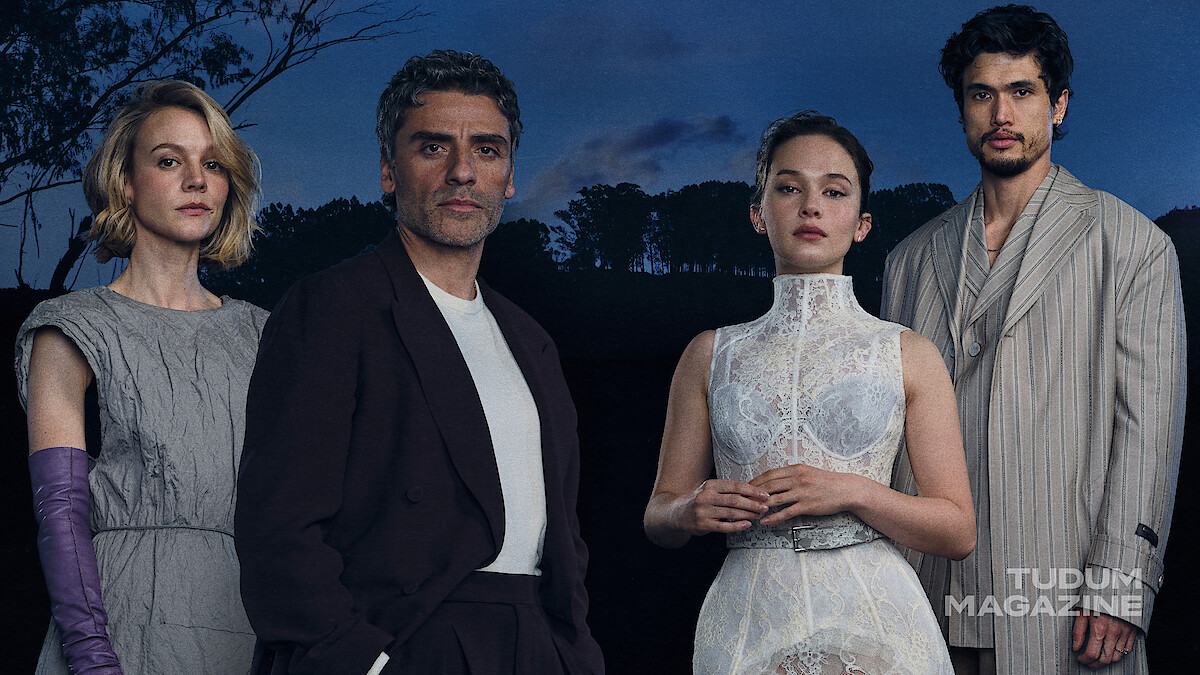
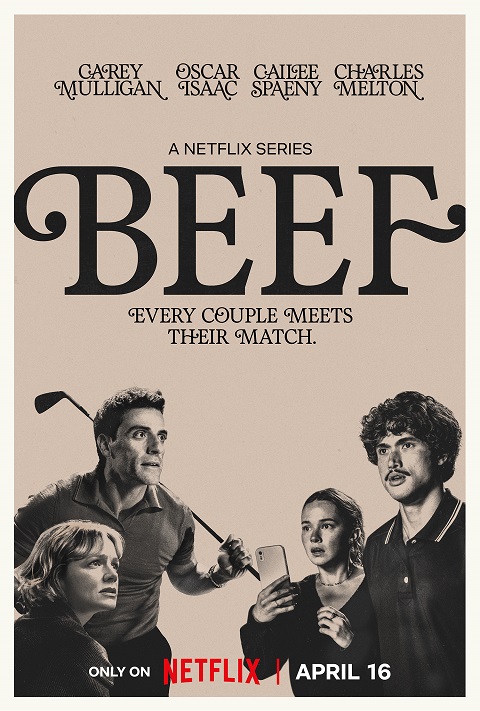
Premiere: April 16, 2026 (Netflix) Episodes: 8 Creator: Lee Sung Jin Directors: Lee Sung Jin, Jake Schreier, Kitao Sakurai Cinematographer: James Laxton Composer: Finneas O'Connell 1
Cast: Oscar Isaac (Josh), Carey Mulligan (Lindsay), Charles Melton (Austin), Cailee Spaeny (Ashley), Youn Yuh-jung (Chairwoman Park), Song Kang-ho (Dr. Kim), Seoyeon Jang (Eunice), William Fichtner (Troy), Mikaela Hoover (Ava) 1
Sources
-
Netflix Tudum — "BEEF Season 2 Ending Explained" (Apr 20, 2026). netflix.com/tudum/articles/beef-season-2-ending-explained ↩↩↩↩↩↩↩↩↩↩↩↩↩↩↩↩↩↩↩↩↩↩↩↩↩↩↩↩↩↩↩↩
-
Netflix Tudum — "Did You Spot All the Easter Eggs in Season 2 of BEEF?" by Alex Frank (Apr 19, 2026). netflix.com/tudum/features/beef-season-2-easter-eggs ↩↩↩↩↩↩↩↩
-
Netflix Tudum — BEEF Season 2 Cast announcement / cinematography details (Apr 22, 2026). netflix.com/tudum/articles/beef-season-2-cast ↩↩↩↩↩↩↩↩↩↩↩↩
-
Metacritic — BEEF Season 2. metacritic.com ↩↩↩
-
Rotten Tomatoes — BEEF Season 2. rottentomatoes.com ↩
-
Netflix Tudum — "Did You Spot All These Salty Sprinkles in BEEF Season 2?" by Alex Frank (Apr 19, 2026). netflix.com/tudum/features/beef-season-2-easter-eggs — beverage symbolism section ↩↩↩↩↩
-
The Viewer's Perspective — "Beef Season 2 Recap: The Full Series Breakdown" (Apr 17, 2026). theviewersperspective.com/2026/04/17/beef-season-2-recap-full-series-breakdown ↩↩↩↩↩↩↩↩↩
-
Netflix Tudum — "Who Is Fighting in BEEF Season 2? Guide to All the Relationships, Rivalries" (Apr 15, 2026). netflix.com/tudum/features/beef-season-2-relationships-explained ↩↩↩↩↩↩↩↩↩↩↩↩
-
Vulture — "'Beef' Recap, Season Two, Episode 7: Rough Air" by Rafaela Bassili. vulture.com/article/beef-recap-season-2-episode-7-netflix.html ↩↩↩↩↩↩↩
-
Pajiba — "Spoilers: The Successful End of 'Beef' Season 2 Explained" (Apr 22, 2026). pajiba.com/tv_reviews/spoilers-the-successful-end-of-beef-season-2-explained.php ↩
-
Elle — "The Final Shot of 'Beef' Season 2 Will Make You Rethink Your Relationships" (Apr 22, 2026). elle.com/culture/movies-tv/a71050805/beef-season-2-finale-ending-explained ↩
-
Pedestrian TV — "What Happened In The Beef Season 2 Finale? Ending Explained" (Apr 23, 2026). pedestrian.tv/entertainment/beef-season-2-netflix-finale-ending-explained ↩